
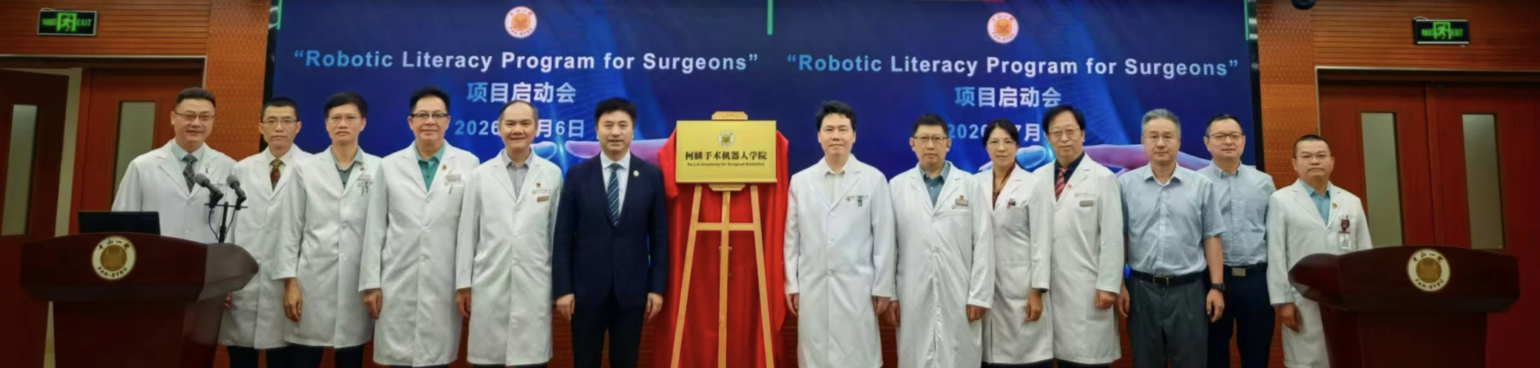
On the morning of July 6, the First Affiliated Hospital of Sun Yat-sen University held the launch meeting for its Robotic Literacy Program for Surgeons. Vice President Professor Ming Kuang, Professor Xiaoyu Yin, and Professor Qingtang Zhu attended the meeting, alongside members of the Ke Lin Surgical Robotics Academy’s teaching and management team—including specially appointed advisory instructors, expert advisory instructors, assistant instructors for basic and advanced training, and research and administrative teams—as well as trainee representatives from various surgical specialties.
The launch marks the formal implementation of a structured robotic surgery training system with hospital-wide coverage, tiered instruction, and standardized training requirements.
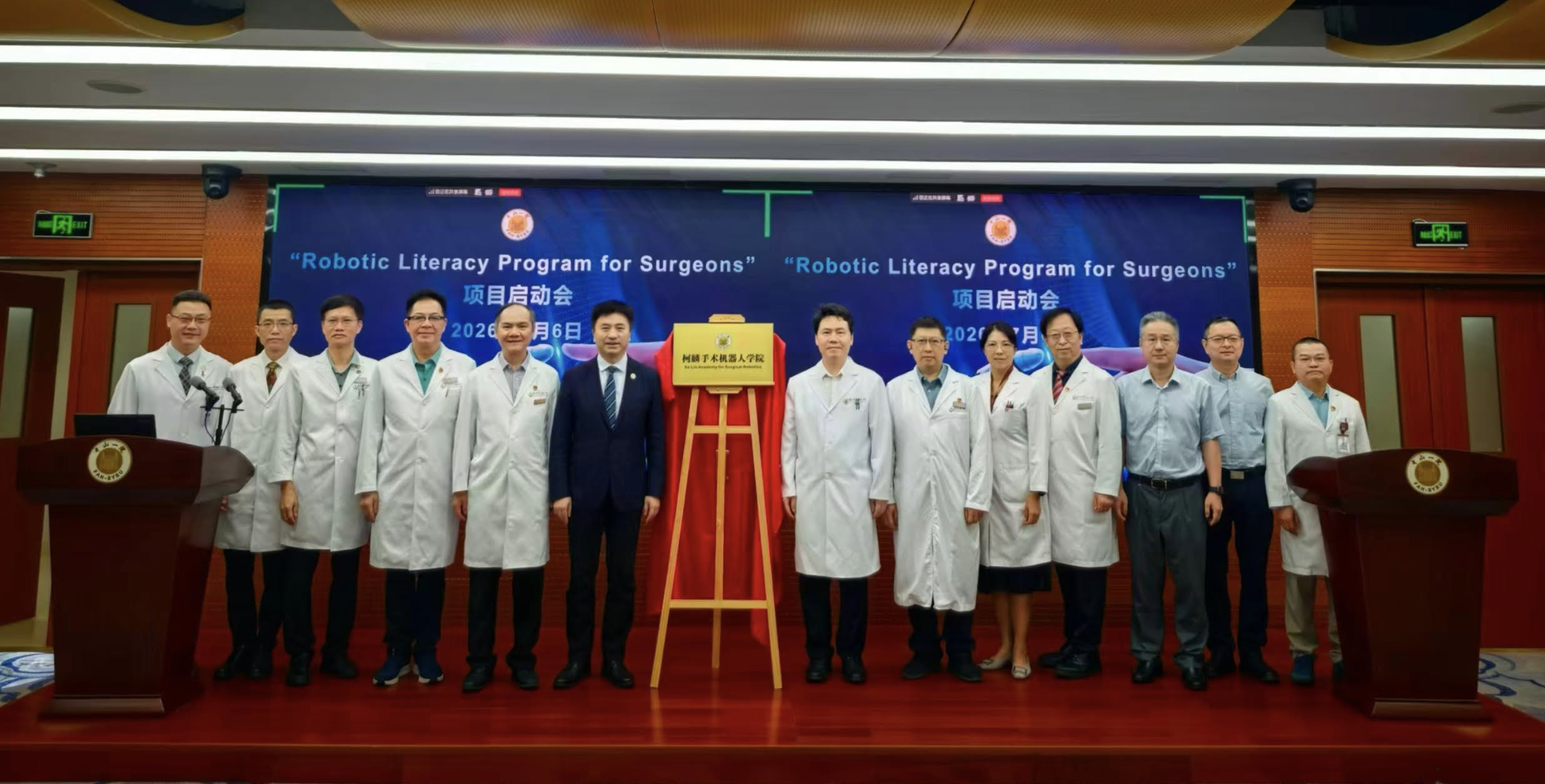
Hospital leaders and representatives of the specially appointed advisory instructors.
Professor Kunsong Zhang, Deputy Director of the Department of Education, chaired the meeting. In his opening remarks, Vice President Ming Kuang explained that the program was initiated and named by Hospital President Haipeng Xiao. It is a key medical education initiative designed to advance the hospital’s development of intelligent surgery and strengthen its pipeline of highly skilled surgical professionals.
Robotic minimally invasive surgery is rapidly expanding in China, with applications continuing to grow. However, gaps in standardized training systems and shortages of specialized professionals have constrained the consistent, standardized clinical application and high-quality adoption of these technologies.
In line with its goal of becoming a comprehensive National Medical Center, the hospital is drawing on the International Robotic Surgery Training Center, jointly established with the University of California, and the Ke Lin Surgical Robotics Academy to build a unified, hospital-wide robotic surgery literacy training framework focused on strengthening surgeons’ core clinical competencies.
The program combines a progressive curriculum tailored to different training levels and categories with assessment and evaluation throughout the training process. It aims to strengthen surgeons’ competencies in standardized robotic surgical techniques, clinical reasoning, teamwork, and comprehensive perioperative management, addressing gaps in standardized workforce development for intelligent surgery.
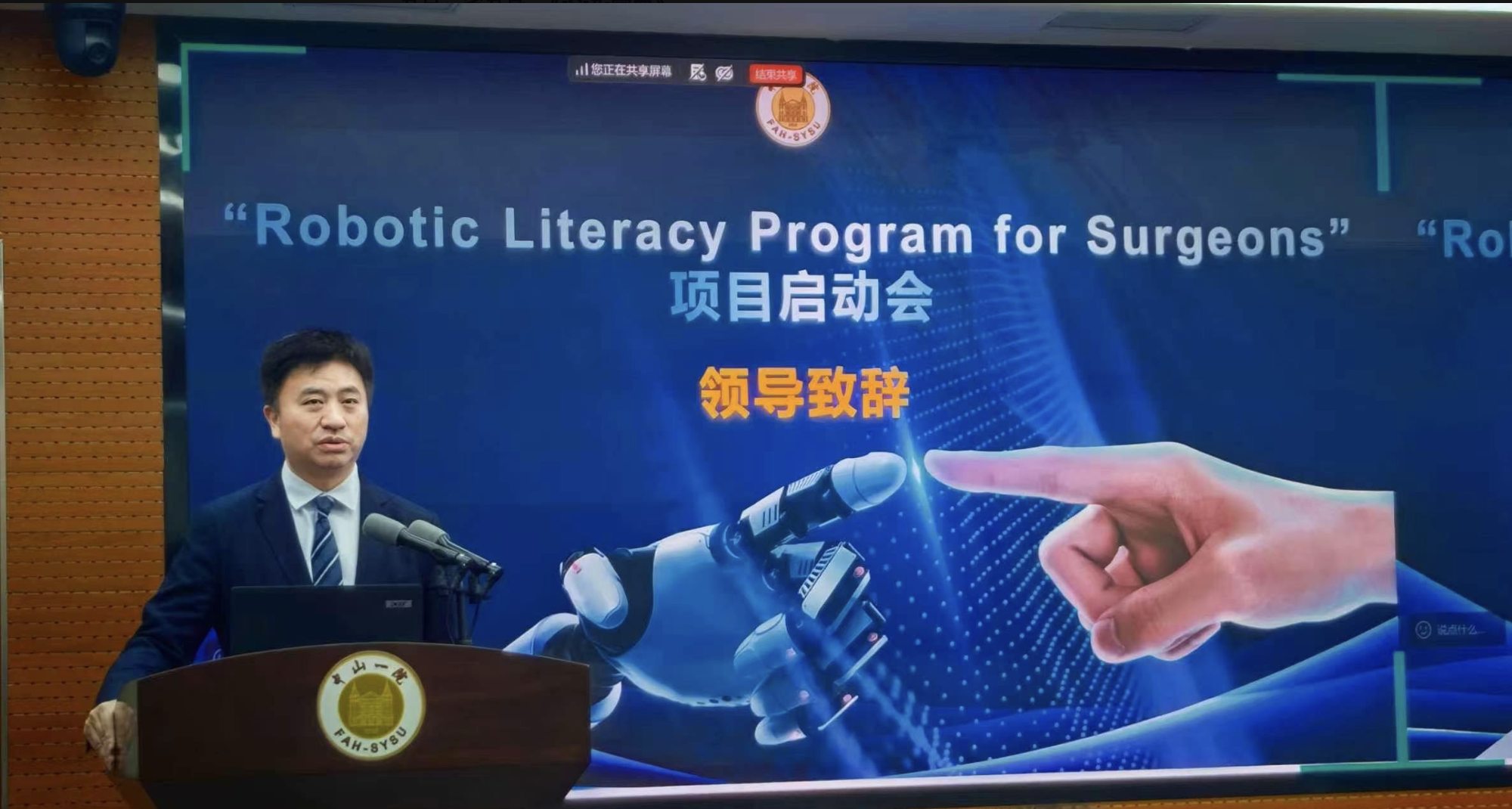
Vice President Ming Kuang delivers his opening remarks.
Vice President Kuang emphasized that the continued evolution of robotic surgery involves more than technological upgrades to clinical equipment. It represents a comprehensive transformation of surgical care concepts, procedural standards, and models of team collaboration.
The program closely aligns with national priorities for the high-quality development of minimally invasive and intelligent surgery, as well as the hospital’s requirements for establishing a National Medical Center. Through its international collaboration platform, the hospital aims to connect with leading global approaches to surgical education and cultivate highly skilled professionals in intelligent surgery.
He encouraged the teaching team to uphold training standards, strengthen curriculum development, and maintain rigorous quality assurance. He also urged all trainees to focus on clinical needs, continuously refine their skills, and apply their learning in practice, using standardized, precise, intelligent minimally invasive techniques to improve the quality of care and benefit patients.
During the meeting, Professor Kunsong Zhang provided a detailed overview of the program’s background, core training objectives, implementation plan, curriculum, and assessment and evaluation framework. To ensure sustained implementation to a high standard, the Ke Lin Surgical Robotics Academy has assembled a professional teaching and management team of 100 members. The team brings together specially appointed international advisers, experienced surgical experts from the hospital, and personnel responsible for specialized training, research, and administrative support to establish a comprehensive, coordinated robotic surgery training system.
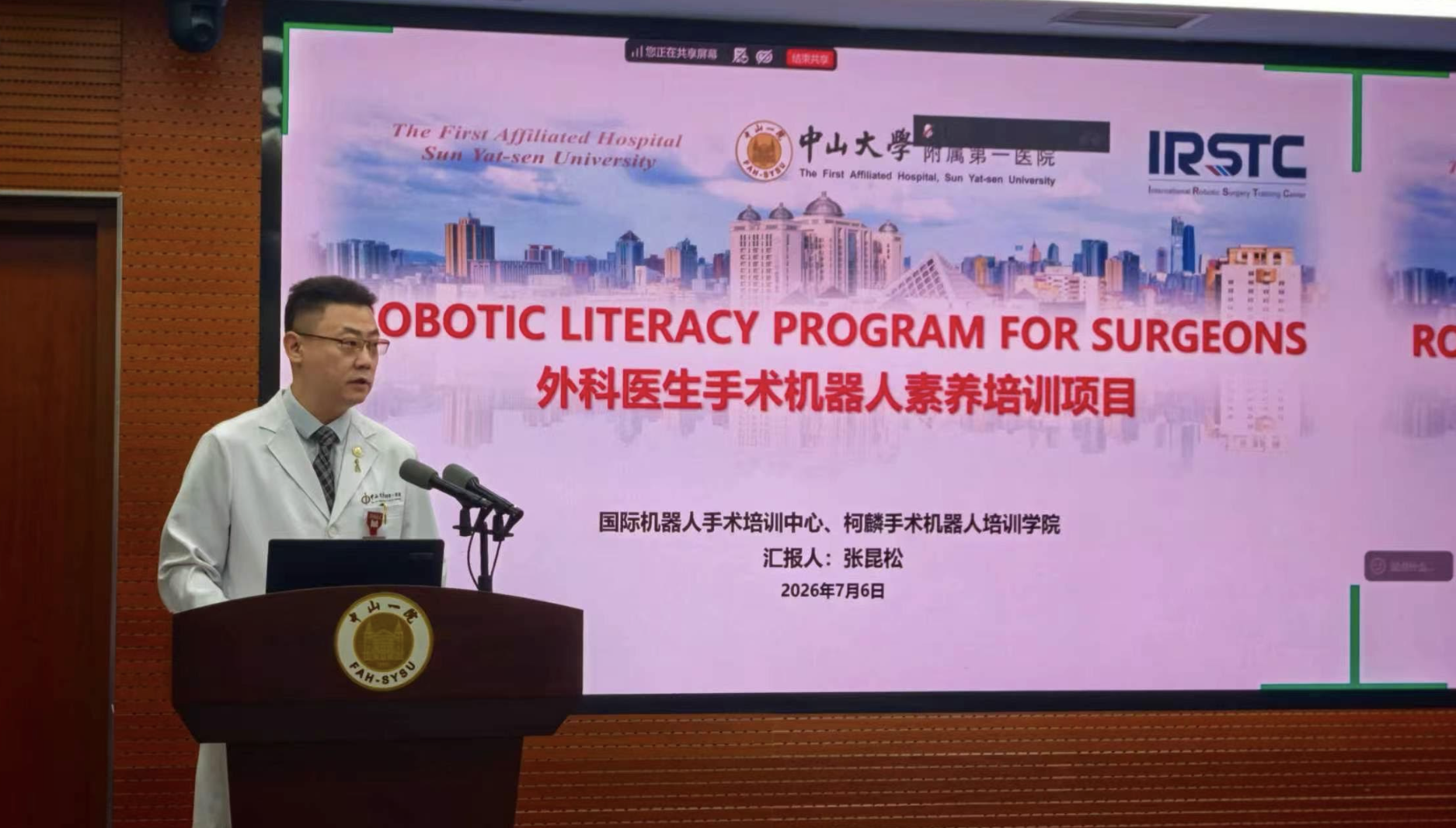
Professor Kunsong Zhang, Deputy Director and Acting Head of the Department of Education, presents an overview of the program.
The meeting concluded with a group photograph of hospital leaders and representatives of the specially appointed advisory instructors.
Moving forward, the hospital will continue implementing tiered robotic literacy training for surgeons across the institution and strengthening its talent pipeline in intelligent surgery. These efforts will support the high-quality advancement of surgical care toward minimally invasive, intelligent, and internationally aligned practice, providing higher standards of surgical care to safeguard patients’ health and meet their healthcare needs.


