

On September 26- 28, 2025, The First Affiliated Hospital of Sun Yat-sen University (FAH-SYSU) and CITRIS Health jointly hosted the 2025 Pacific-Rim Conference on Healthcare Innovation. The theme of the conference was “Healthcare Innovation and Outlook: A New Era of Translational Research in Robotic Surgery and Precision Medicine.”
The conference focused on robotic surgery, healthcare leadership, and the application of artificial intelligence. Experts from leading global academic and medical institutions, including FAH-SYSU, the University of California, Berkeley, the University of California, Davis Health, Columbia University, Imperial College London, and Tsinghua University, gathered for in-depth discussions on cutting-edge developments and future trends in medicine.
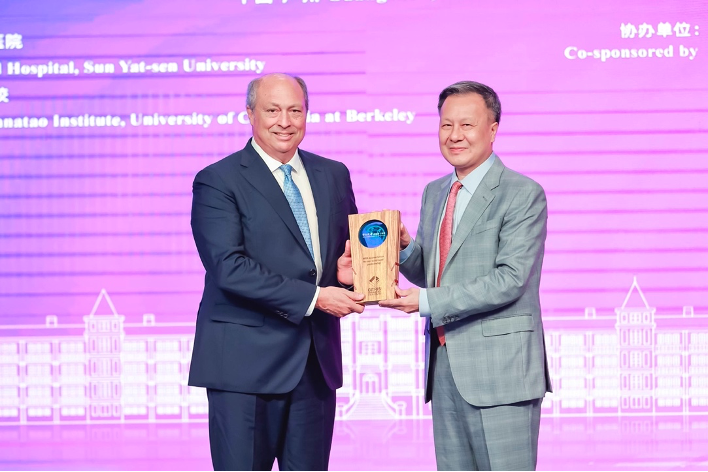
New beginnings: Leadership Academy for strategic medical scientists unveiled
Donny Yoo, Acting Consul General of the U.S. Consulate General in Guangzhou; Ding-Jo Currie, President of the Lingnan Foundation; Frederick P. Ognibene, Strategic Advisor for High-Quality Development of the hospital and former Deputy Director for Academic Affairs and Strategic Partnerships at the National Institutes of Health; Xu Kewen, Vice President of Shenzhen Mindray Bio-Medical Electronics Co., Ltd.; Xiao Haipeng, President of The First Affiliated Hospital of Sun Yat-sen University (FAH-SYSU); and other hospital leaders attended the opening ceremony. Kuang Ming, Assistant to the President of Sun Yat-sen University, Dean of the School of Medicine, and Vice President of FAH-SYSU; and David Lindeman, Executive Director of CITRIS Health, co-chaired the opening ceremony.
In his opening remarks, President Xiao Haipeng noted that the conference addresses major global healthcare challenges such as aging, chronic diseases, and the allocation of medical resources. He expressed his hope that this conference would serve as a catalyst for deeper international dialogue and cooperation, jointly exploring innovation-driven, patient-centered, resilient, and inclusive healthcare solutions. He expressed his hope to contribute to building a future healthcare ecosystem that prioritizes both humanity and technology, upholds dignity, and fosters innovation, thereby contributing to the development of a community with a shared future for mankind.
At the opening ceremony, President Xiao Haipeng officially announced the establishment of the Leadership Academy of The First Affiliated Hospital of Sun Yat-sen University. . “Faced with numerous challenges in global health, we urgently need exceptional, innovative, and cross-cultural leadership as a core pillar, he said. The academy aims to systematically cultivate strategic medical scientists who possess the qualities of a statesman, physician, educator, diplomat, and entrepreneur, enabling them to better address today’s complex and ever-changing global health needs and challenges.
Forward-looking Planning: Discussing Strategic Integration of Global Healthcare
On September 26, 2025, a high-level roundtable meeting was held. Guests engaged in an in-depth discussion on the core topic of “Strategic Integration of Artificial Intelligence and Robotics in Global Healthcare.” The meeting was moderated by Vice Dean Kuang Ming and David Lindeman. Some of the guests in attendance included:
- Xiao Haipeng, President of FAH-SYSU
- Ding-Jo Currie, President of the Lingnan Foundation
- David Lindeman, Executive Director, CITRIS Health
- Frederick P. Ognibene, former Deputy Director for Academic Affairs and Strategic Partnerships at the National Institutes of Health and Strategic Advisor for High-Quality Development at FAH-SYSU
- Zhang Wenzhi, President of the University of Hong Kong-Shenzhen Hospital
- Ruth Williams-Brinkley, Managing Director, RWB Advisory Services and Retired Regional President, Kaiser Foundation Health Plan of the Mid Atlantic States
- Jian Zhang, CEO of Chinese Hospital in San Francisco
The conference’s special sessions were held on September -28, with the following themes: “Global Excellence in Healthcare Leadership: Innovation, Accessibility, and Collaboration,” “AI Empowering Robotics and Emerging Medical Technologies to Improve Surgical Precision,” and “Health Informatics and Clinical Practice: Practical Applications of Artificial Intelligence.”
Session 1: Global Excellence in Healthcare Leadership: Innovation, Accessibility, and Collaboration
In the first special session, Dean Xiao Haipeng delivered a keynote speech titled “Global Healthcare: The Call for Excellence in Leadership.” He pointed out that the healthcare industry is currently driven by both technological innovation and escalating demand. Excellent healthcare leadership requires not only a deep understanding of technology and clinical practice, but also of collaboration and fairness. This requires both promoting technological innovation and ensuring that its fruits benefit a wider range of communities, particularly those in areas with limited medical resources.
During the roundtable discussion, renowned experts from leading medical institutions in China and the United States, including Ruth Williams-Brinkley; Zhang Wenzhi, Li Jian, Executive Director of the Guangxi Branch of the First Zhongshan Hospital; and Jian Zhang discussed topics such as “How to Cultivate Excellent Healthcare Leadership.”
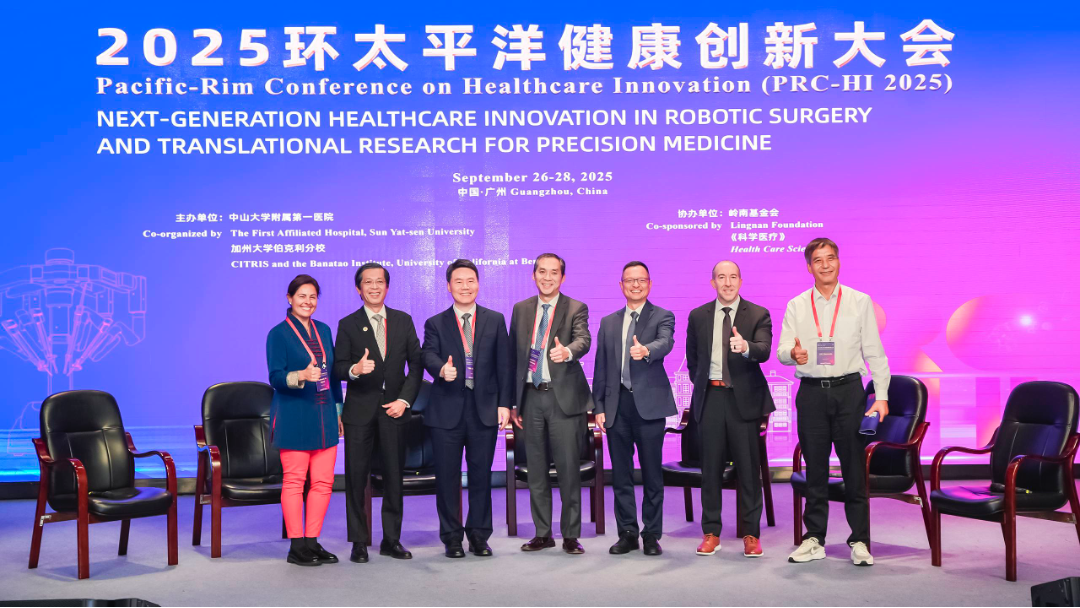
Session 2: AI Empowers Robotics and Emerging Medical Technologies to Enhance Surgical Precision
The second session focused on emerging medical technologies such as AI, addressing core clinical needs.
Experts and scholars from around the world shared their cutting-edge research. Yin Xiaoyu, Vice President of The First Affiliated Hospital of Sun Yat-sen University (FAH-SYSU), shared his personal experience with over 1,200 cases and discussed the application of robotics in hepatobiliary and pancreatic surgery. Arnold P. Advincula, Director of the Department of Gynecologic Surgery at Columbia University Irving Medical Center, discussed the innovative directions and practical challenges of robotic gynecologic surgery. Cheng Chao, Director of the Department of Thoracic Surgery at The First Affiliated Hospital of Sun Yat-sen University (FAH-SYSU), explained how robotic surgery is enhancing the clinical practice and clinical trials of thoracic tumors. Ferdinando Rodriguez y Baena, Co-Director of the Hamline Center at Imperial College London, elaborated on the transformation of medical robotics from technology research and development to clinical application.
Chris Fitzpatrick, Senior Director of Asia Marketing at Intuitive Fosun, delivered a speech titled “Innovation Leading the Transformation of Surgery.” The Director of the Cerebrovascular Disease Center at the First Affiliated Hospital of the Naval Medical University (Shanghai Changhai Hospital) shared the development progress of pan-vascular interventional robots. Lucas Krauel Giménez-Salinas, Director of the Center for Oncology Surgery at the SJD Children’s Hospital in Barcelona, Spain, discussed the application of surgical robots in pediatric surgery, combined with preoperative planning and simulation-based teaching.
Speakers engaged in a roundtable discussion focusing on the innovations and challenges of robotic surgery. Afterward, Ding-Jo Currie presented the Lingnan Excellence Award to Cheng Chao and Arnold P. Advincula, recipients of the Lingnan Excellence Award – Innovation in Surgical Robotics, in recognition of their outstanding contributions to promoting technological innovation and clinical application in robotic surgery.
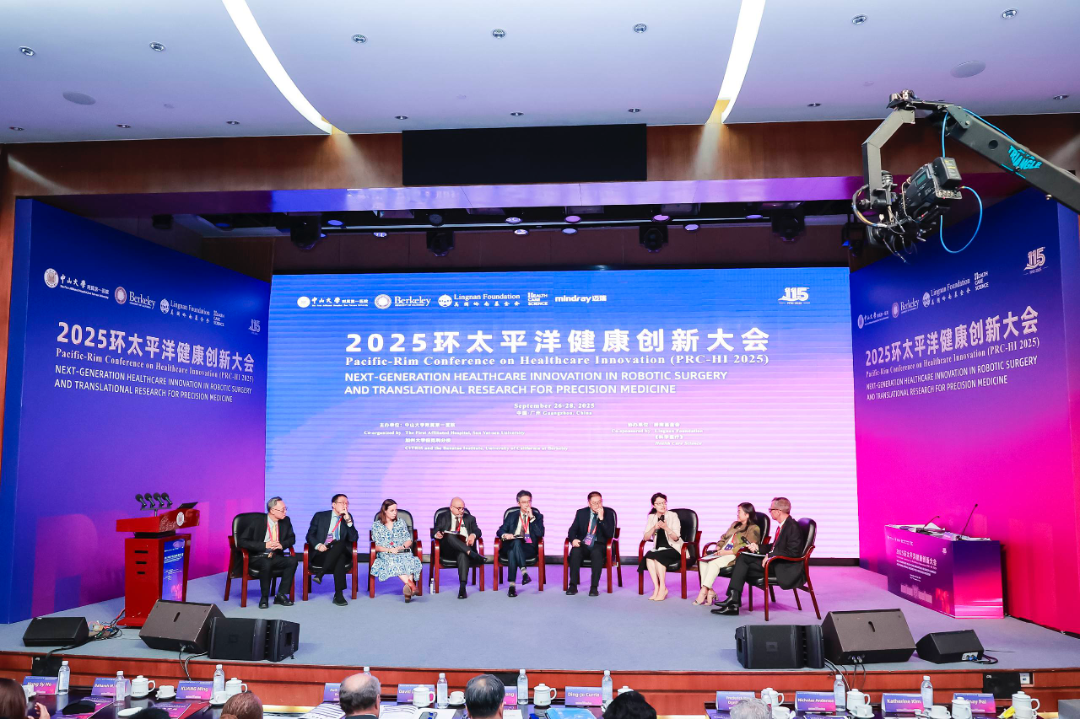
Session 3: Health Informatics and Clinical Practice: Practical Applications of Artificial Intelligence
The third session focused on the practical application and implementation of artificial intelligence in clinical scenarios. Chen Wei, The First Affiliated Hospital of Sun Yat-sen University (FAH-SYSU), introduced the application and exploration of artificial intelligence in nephrology. Maaike Kusters, Director of the Innovation Center at Great Ormond Street Hospital (GOSH), UK, shared case studies of the hospital’s integrated medical AI applications. Wang Zilian, Vice President of The First Affiliated Hospital of Sun Yat-sen University (FAH-SYSU), discussed the progress of artificial intelligence applications in perinatal health management.
In addition, Vinay Pai, Chief Technology Officer and Co-Founder of Health Tequity, discussed the application prospects of digital twins and intelligent agent-based AI in health outcome simulation and prediction; Tao Xiaodong, Executive Director of iFlytek Medical Technology Co., Ltd., introduced the application of AI technology in various scenarios, including community health management and smart hospital services. Li Dong, Director of the Center for Medical Data Science at Tsinghua Chang Gung Memorial Hospital affiliated with Tsinghua University, Hsu Chien-yeh , Distinguished Professor at the Taipei University of Nursing and Health Sciences, and Yin Jin, Engineer at the Biomedical Big Data Center of West China Hospital, Sichuan University, respectively delivered keynote speeches on how to use clinical data for innovative research in the era of smart healthcare, how to improve healthcare services using real-world data and AI, and the exploration and reflection on the application of medical AI.
“We must avoid technological silos and make AI a truly effective assistant in clinical practice.” The panelists held a roundtable discussion focusing on the challenges and breakthroughs in the clinical application of AI, contributing their expertise and perspectives to promote the deep integration of health informatics and clinical practice.
Afterward, the Lingnan Excellence Award (Health Data Science and Artificial Intelligence in Medicine) was presented to Tao Xiaodong and Vinay Pai, winners, in recognition of their outstanding contributions to advancing health data science and medical artificial intelligence.
“This conference is not the end, but a new starting point for medical cooperation in the Pacific Rim.” At the closing ceremony, President Xiao Haipeng stated that through continued international cooperation and innovation, the Pacific Rim will surely lead the global healthcare industry into a new era of greater intelligence, precision, and humanization.


